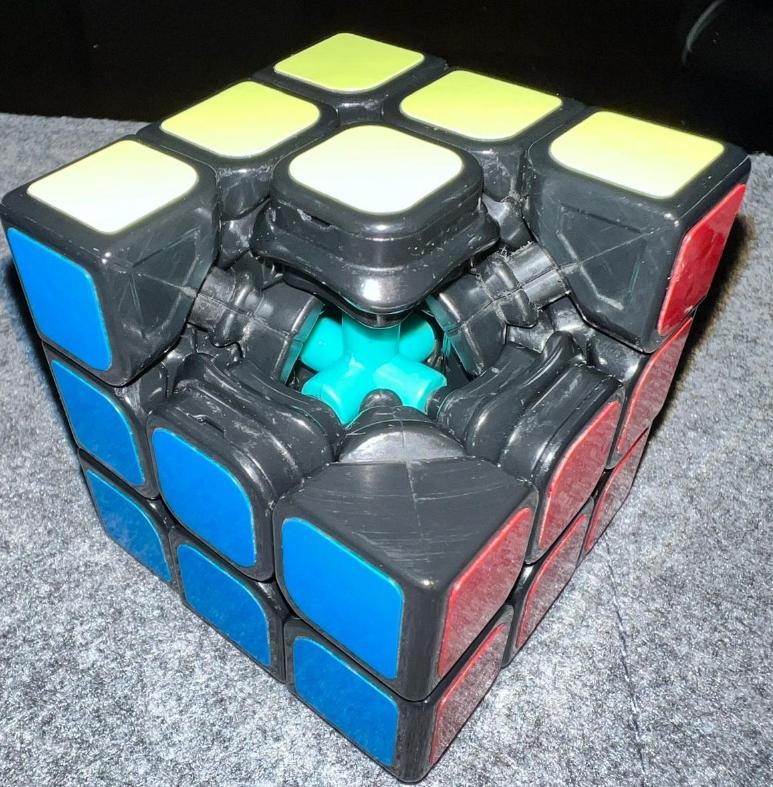
The problem
Anyone can say a part "should be injection molded." Fewer people can price out what that actually costs at a given volume, defend a tonnage and mold-cavitation choice, and show where the manufacturing cost is actually coming from. This project was an exercise in doing that rigorously, alone, for a deceptively complex assembly — a 3x3 puzzle cube has more interacting plastic geometry than it looks like from the outside.
Approach
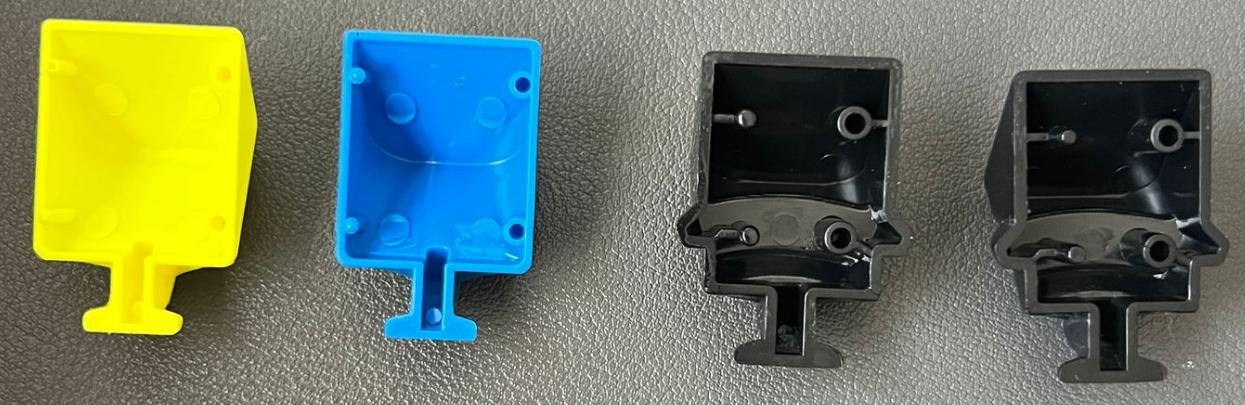
I ran a full Boothroyd-Dewhurst Design-for-Assembly analysis on the cube's internal mechanism to quantify assembly time and part-count efficiency, then moved into manufacturing process economics: modeling injection-molding cycle time from cooling and packing equations, selecting an appropriate clamping tonnage and mold configuration for the part geometry and production volume, and building a per-part cost model that separates material, machine-time, and tooling-amortization cost.
Why this is on the site
Most of my other work is team-based; this one is entirely mine, start to finish, and it's the most quantitatively "manufacturing" piece in the portfolio — directly relevant to any role where a design decision has to be justified in dollars per unit at production volume, not just in CAD.